
The 4 Ps of the New Social Calendar: Pace, Pattern, Peace and Purpose
In 2026, the social calendar has become a quiet form of self-definition. It is no longer simply a record of engagements, but a way of editing time, protecting attention, and deciding what deserves a place in a life you tried to curate with clear purpose.

Image credit: Esther de Ramos via Pinterest
We left Central just as the harbour started to glow, the city folding itself into evening. On my phone, a group chat was negotiating an evening’s plan: one friend between flights, another slipping out of a gallery opening early, a third still half‑dressed in a studio somewhere in Sheung Wan. Hong Kong was at its usual pace. Even on a Tuesday, the assumption was that if you want to see people, you can. You just go.
There was a time when the calendar sat behind everything else: work first, travel around it, and the social layer in the margins. Now it has taken on a more central role. To plan well is not just to be organised, but to signal discernment. That is to say, to choose with care, to resist noise and to make room only for the moments that feel worth keeping.
That shift is visible in the rhythm of cities. In Hong Kong, spontaneity still has a kind of natural ease; in London, weekends are often spoken for weeks in advance. Different places move at different speeds, but the underlying instinct is the same: people are becoming more selective about how they spend their time, and more intentional about the company, settings and experiences they allow into it.
As such, the new social calendar is shaped by four quiet forces: pace, pattern, peace and purpose. The speed of our environment, the way our weeks cluster, the sense of ease we are trying to protect, and why a commitment earns its place - all of these become glaringly important in how we now structure our lives.
The result is a different relationship to presence. Fewer commitments chosen more carefully tend to carry more weight. A dinner, a gallery opening, a private lunch, a city break, a hotel weekend with no agenda: each one has to justify itself. In that sense, the modern diary has become less a list than a reflection of taste.
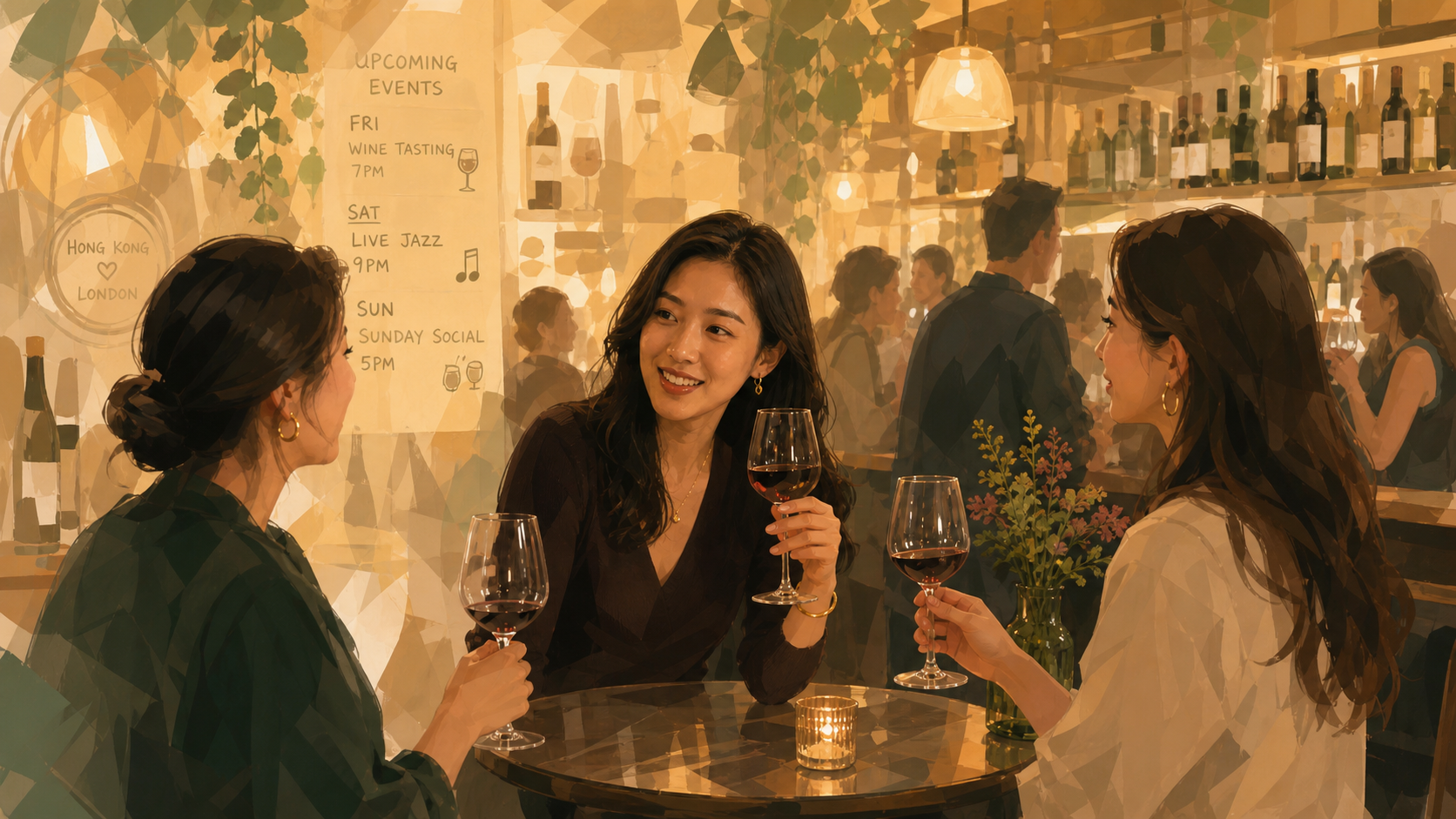
That is why the social calendar now says as much about taste as it does about logistics. It reveals what people value, where they want to be seen, and which rooms they believe are worth entering. A well-planned month is no longer just efficient. It is expressive. It tells the story of a life that is trying to balance appetite with discernment.
It’s also only when you try to live between cities that you start to see a pattern. In London, the same conversation would be threaded through the calendar weeks in advance: WhatsApp plans, someone consulting their partner’s work schedule, another checking if their dog can be left with the neighbours… The city’s geography and (sometimes) Sunday trading laws do the rest. A simple dinner becomes a small logistical operation, which is precisely why people treat diary space as precious.
Somewhere between these two rhythms, the social calendar has stopped being a piece of admin and become something else: a quiet ledger of what we value. It is the place where taste, habit and aspiration meet. The entries look ordinary - drinks, dinners, flights, weekends away - but the pattern they make is not.
Spend enough time around people whose job it is to arrange other people’s lives and you see it clearly. A London travel consultant describes her clients in terms of “calendar architecture”: which cities get the first‑choice weekends, where the family holidays sit, what counts as non‑negotiable. A Hong Kong-based friend who runs a gallery talks less about openings than about who can actually be there, given Basel, Venice, school terms, and end‑of‑quarter reporting. Or those with busy schedules forthrightly said they won’t be doing anything on a free Saturday. “Do not even try to call me” is not so much a suggestion but a declaration.
The calendar is the soft power behind all of this. It quietly decides which friendships remain live, which restaurants stay in rotation, which cities feel current. A booked‑out October can look impressive on paper, but if the month has no real centre - no dinner you’re genuinely excited about, no trip that actually resets the rhythm - it feels hollow in hindsight. A leaner month, with three or four things that matter and one weekend purposely left blank, reads entirely differently.
Luxury sits in the background here, and not only in the obvious ways. There are the surface details: the wine bar where the staff know your name, the members’ club with the comfy chairs and soft lighting, the flight pushed to business because the overnight is too brutal otherwise. But the deeper distinction is less visible: having enough control over your time to say no.
The new currency is not being everywhere; it is being able to choose where you are.
I think about this most when moving between Hong Kong and London, two cities that handle spontaneity in opposite ways. In Hong Kong, the distances are small and the shared references tight. A half‑serious “drink later?” sent to four people can become a table in an hour: no one is ever more than a short ride away, and most of the places that matter live within a narrow band of neighbourhoods. The calendar stretches easily, absorbing last‑minute plans without much stress.
London, in contrast, makes you work for every encounter. The city’s sprawl means that a friend’s postcode can be the difference between “Yes” and “Let’s do next month.” Trains, childcare (in my case, dogcare), early closing times, and the sheer friction of crossing town all build into the equation. The result is a culture of pre‑commitment: weekends pencilled in months ahead, dinners booked with deposits and reminders, a growing sense that any evening left unclaimed should probably stay that way.
Neither rhythm is better; they simply reveal different instincts. In a fast city, the calendar reacts. In a slower one, it strategises. But in both, you can feel the same underlying move: away from automatic yes and toward what feels intentional. People are not necessarily doing less. They are trying to do what they do with more clarity.
This is where the social calendar intersects with design and hospitality. If time has become the thing everyone is trying to edit, then the rooms that make it onto the page have to justify themselves. The best bars and restaurants understand this. They no longer sell only food or drink; they sell atmosphere that feels legible to the people who want to be there.
Walk into a certain wine bar off Soho or a tucked‑away place on Hong Kong Island, and you know quickly whether the night will belong to you. It’s in the height of the stools, the sound level, the way a table can hold conversation without forcing it. The people behind these rooms think in systems: light, flow, pacing, staff who intuit whether you want to talk or disappear into your glass.
When those systems work, the decision to say yes next time becomes effortless. The name goes into the diary without negotiation.
All of this points to something more general: a shift from filling time to editing it. For years, the default impulse was to pack the calendar, to move as much as possible, to treat slowness as failure or lack of opportunity. Now the people paying attention are starting to do the opposite. They are leaving air in the week. They are protecting one or two evenings where nothing is scheduled. They are thinking about the shape of a month rather than just its volume.
You can see it in the way they talk. “I need a night in between those two dinners.” “Let’s do one really good trip instead of three rushed ones.” “I’ll come to that if the rest of the week doesn’t collapse.” These aren’t excuses. They’re an emerging etiquette around time.
It makes the calendar more honest. Instead of being a performance of busyness, it becomes a quiet record of what someone actually cares about: certain people, certain places, certain kinds of night. The entries themselves - drinks, dinners, flights, weekends - haven’t changed much. The meaning behind them has.
If you were to look at your calendar from this year as a stranger, what story would it tell? One of constant motion and little memory? One of a few cities that keep drawing you back? One of dinners at the same table with the same people, or one of experiments with new rooms, new circles?
The social calendar is, in the end, a private object. Most of it is never visible to anyone else. But it may be one of the most revealing documents we have. It shows who we choose, what we repeat, how much space we allow ourselves to breathe.
In a world that keeps asking for more, perhaps the most modern thing you can do with yours is simple: write less in it, and make every line count.
